The Psychology of Landing Page Conversion: Why Visitors Take Action
Summarize this blog with AI:
Table of Contents
- Why Some Landing Pages Convert (and Others Don’t)
- The Psychology Behind Page Conversions
- Clarity Over Clutter: Designing for Confidence
- Reducing Cognitive Load
- Understanding Social Proof
- Building Trust with Trust Signals
- Crafting High-Converting CTAs
- Using Scarcity and Urgency Effectively
- Optimization and Development of the Landing Page Experience
- Emotional Triggers That Drive Action
- Creating High-Converting Landing Page Templates
- Why Psychology Matters More Than Design Trends
- Conclusion
- FAQs
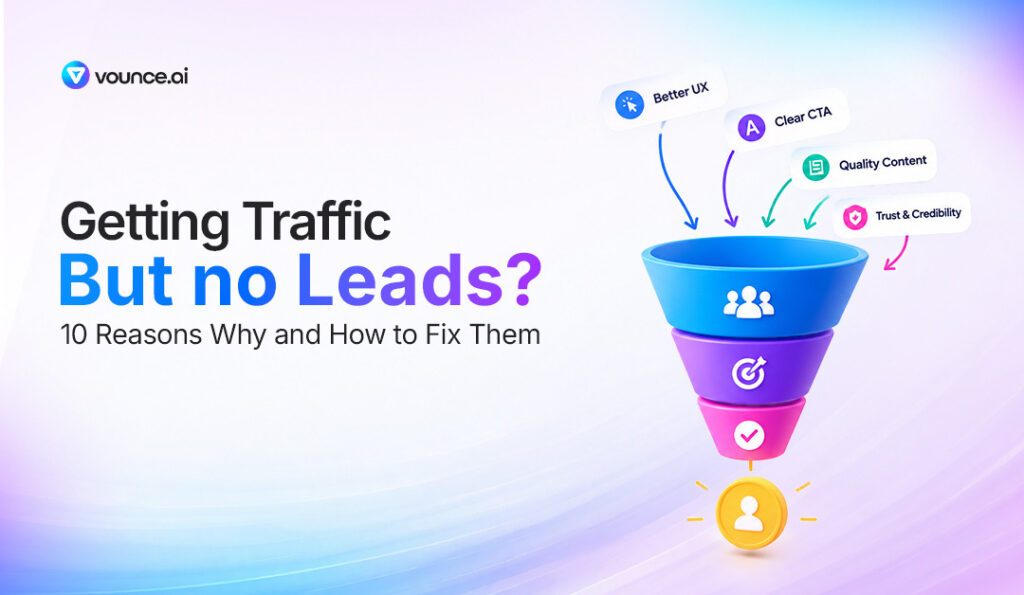
In this post, we’re going to focus on one of the most crucial factors of many landing pages, which is why some convert while others don’t.
It’s something all marketers are familiar with.
You generate leads with paid advertising, email marketing, social media, and/or from SEO (search engine optimization) . They land on your landing page, scroll for a few seconds, and go. They come to your landing page, and after a couple of seconds, they scroll up and down and leave without taking any action.
Average pages don’t always have better copy, bigger budgets, or more traffic; rather, it’s about their conversion rates. At the core of many times, it’s about comprehending individual thinking, information processing, and decision-making styles.
This is where landing page psychology comes into play and can help to be a competitive advantage.
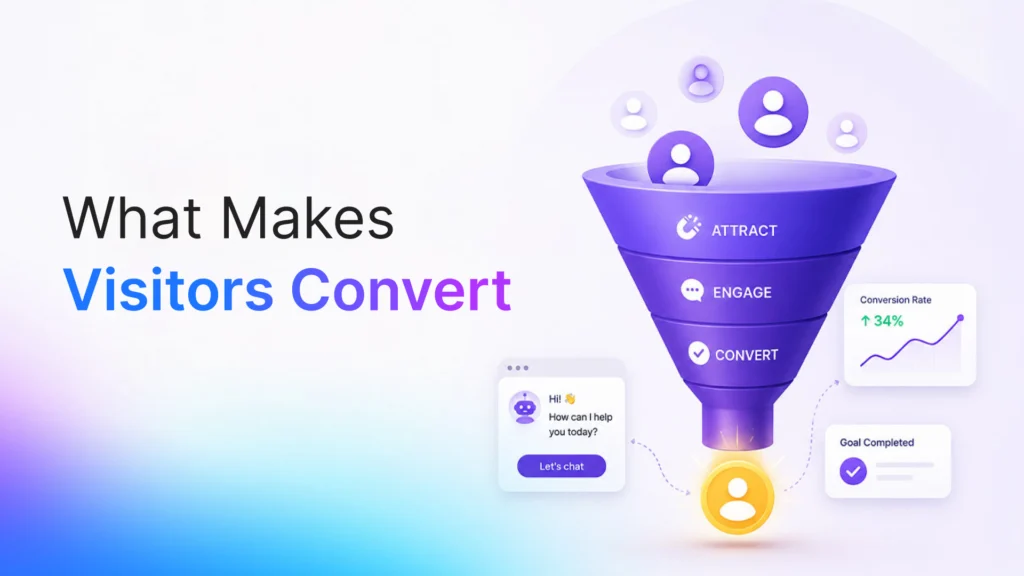
As the most successful marketers know, conversions occur when a landing page embodies natural human behavior. Following well-known aspects of user behavior psychology, brands can develop experiences that are intuitive, trustworthy, and appealing.
First, let’s discuss some of the psychology of page conversions, and then we can look at how marketers can design pages to get more conversions.
Relying on the information provided by the design: Understanding how design influences user decisions
People usually feel that when customers are making buying decisions, they are doing so rationally.
There are numerous studies that demonstrate that is not the case.
Emotions, mental shortcuts, trust, and perceived risk play a significant role in the decision-making process of the human being. It only takes a couple of seconds for visitors to make their decision on whether to bear with or drop a page.
This means that there are three questions that need to be answered on the landing page right off the bat:
- What is this?
- Why do I need it, and how will it benefit me?
- Can I trust it?
These questions are more likely to be answered the sooner they are.
This is the key to a successful CRO strategy.
As noted in the previous section, the first impression is the most crucial. .
The term is “halo effect,” coined by psychologists.
The users automatically assume the product/service is more credible when they see an attractive and orderly page. If they see an attractive and orderly page, they automatically assume the product/service is more credible.
That’s why a conversion-focused design is important.
Clutter — confusion and uncertainty. Confidence is built with a professional design that’s clean.
There are some essential landing page design principles that get conversions up:
- Clear visual hierarchy
- Consistent branding
- Easy-to-scan layouts
- Use of color and variety in the typography
- Mobile-friendly design
The visitor wants to know at the very start of the visit where he should pay his attention.
Reducing Cognitive Load
Mental work is necessary for each and every decision.
The harder it’s going to be for visitors to use your site, the more they will be inclined to leave.
A top landing page best practice is to minimize the amount of “cognitive load.”
That involves simplifying any and all.
- Fewer distractions
- Shorter forms
- Clear messaging
- Simple navigation
- Focused offers
Conversion rates will occur naturally when the value proposition is understood rather quickly by the users.
Marketers have a big part of conversion psychology that they handle with this concept.
The concept of social proof: What is social proof?
When making choices, people tend to seek others’ input.
If people see that others have used, trusted, or recommended a brand, they are more likely to trust and choose it themselves.
That’s why social proof marketing is one of the most powerful psychological signals that can be used on landing pages.
Social proof comes in a variety of forms, such as the following:
- Customer testimonials
- Reviews and ratings
- User-generated content
- Success stories
- Customer counts
- Industry recognition
Social proof helps to eliminate uncertainty and increase confidence.
It is one of the most effective landing page elements that will enhance conversion rates.
Learn how to create trust with the help of trust signals.
The ability to trust is a key ingredient in conversions versus bounce.
Risk assessment is an ongoing process in which visitors determine whether to act or not.
That’s when trust signals come into play as they help reduce the risk.
Examples include:
- Security certifications
- Money-back guarantees
- Privacy assurances
- Industry awards
- Verified customer reviews
- Partner logos
The reason trust signals work is they tackle subconscious concerns prior to anyone expressing them.
The more trust your page sends, the better your chances are at converting.
Developing Effective Landing Page CTAs
The call to action is the point where conversions take place.
However, a lot of marketers dismiss their landing page call-to-action as a less important part of their marketing strategy.
If you want the CTA to be psychologically effective, then there has to be clarity and confidence.
Avoid generic CTA labels such as:
- Submit
- Continue
- Click Here
Employ action words:
- Get Started for Free
- Get My Demo
- Download the Guide
- Book My Consultation
The advantage of the benefit to the user (the CTA) should be made very clear.
It may make a big difference to conversion rates if this is a small tweak.
The use of scarcity and urgency requires careful consideration.
People tend to place a higher value on things they might lose.
Scarcity and urgency are psychological principles that can significantly influence decision-making and conversions.
Examples include:
- Limited-time offers
- Exclusive access
- Countdown timers
- Limited availability notices
But it is essential to be authentic.
Spending too much time on urgency does more harm than good, as it impacts trust.
Scarcity, when used properly, can be an effective motivator to do something.
Optimization and Development of the Landing Page Experience.
Even a great offer may fail to convert if the user experience is poor.
Users have high expectations for quick and user-friendly interactions.
A good user experience for landing pages comprises:
- Fast loading speeds
- Mobile responsiveness
- Easy navigation
- Readable typography
- Clear content structure
Each “friction point” is a chance for a dropout.
The smoother it is, the better the chances of visitors converting.
Emotional triggers are what inspire action.
Logic provides the justification for decisions, but emotions often start the process of making decisions.
The successful landing pages evoke some of these emotions:
- Security
- Achievement
- Confidence
- Belonging
- Excitement
- Relief
Rather than talking only about features, highlight the outcomes users can achieve.
People want answers to their questions and not a list of features.
Emotion is a key part of psychology that is crucial to understanding conversions on a landing page.
High Converting Landing Page Templates: How to Create Them
If you’re looking to make sustainable conversions, then you should turn your attention to an effective strategy—
- Make sure you understand the value proposition.
Make the key benefit very clearly understood right from the start.
- Reduce Friction
Make forms simple and get rid of extraneous clutter.
- Strengthen Trust
Include testimonials, reviews, and trust signals.
- Improve CTA Visibility
Make the call to action (CTA) text strong and action-oriented.
- Optimize User Experience
Optimize web pages for fast loading and good performance across all devices.
- Test Continuously
Converting a web page is more of an ongoing process rather than a one-time project.
This ensures that high-converting landing pages are consistently created to deliver results.
The human factor, that is, psychology, is more important than design trends.
The trends in landing pages are constantly evolving.
There are still very few changes in consumer psychology, which is very predictable.
The best marketers don’t try to follow the latest design trends; they focus on what drives people to make decisions.
Combined, landing page psychology, conversion-focused design, trust signals, and social proof marketing will ensure conversions occur naturally.
Not all of the top-performing pages are designed to display what marketers want their visitors to see.
They are designed based on the thinking, feeling, and decision-making of visitors.
The real key to successful landing pages is actually that.
Conclusion
Composed landing pages aren’t written just like that. They are well planned and based on tested principles of human behavior psychology, trust, clarity, and motivation.
Implementing key landing page best practices, optimizing the landing page user experience, refining landing page CTA performance, and harnessing the power of social proof marketing will greatly affect performance.
In conclusion, by grasping the psychology behind landing page conversions, businesses can create more natural and frictionless experiences that prompt actions and drive higher conversion rates and the creation of more high-converting landing pages.
// FAQs
Frequently Asked Questions
Landing pages designed to drive specific actions from visitors – like signups, purchases or lead generation – are high converting landing pages.
The psychology of landing pages is a component of the marketing field that is so vital that it helps marketers design pages that are more likely to generate leads.
Trust signals are reviews and testimonials, certifications, guarantees and security badges that eliminate hesitation.
Make your CTA more appealing with action-oriented language, clear benefits and prominent placement.
Unclear messaging, too many distractions, and weak CTAs are the most common reasons visitors leave without converting.