Best Landing Page Builders for Agencies in 2026
Summarize this blog with AI:
TL;DR
Finding the right landing page builder for agencies is less about choosing the platform with the biggest feature list and more about finding one that fits the way your team actually works.
Agencies typically need to create pages for multiple clients, launch campaigns quickly, make frequent changes, and test different versions without turning every update into a design or development project.
Here are the seven platforms we’ll compare:
Platform | Best for |
| Vounce | Performance & growth campaigns |
| Landingi | Agencies managing pages at scale |
| Unbounce | PPC & conversion-focused agencies |
| Instapage | Enterprise advertising teams |
| Leadpages | Small & mid-sized agencies |
| HubSpot | Agencies using HubSpot |
| GoHighLevel | Full-service marketing agencies |
Vounce stands out for agencies that care about campaign speed, AI-assisted creation, testing, personalization, and reducing developer dependency. Landingi is a strong choice for high-volume landing page management, while Unbounce remains popular with PPC and CRO teams.
Instapage is better suited to sophisticated advertising programs. Leadpages is a simpler option for smaller agencies. HubSpot makes sense when the client already operates inside its ecosystem, while GoHighLevel is designed for agencies looking for a broader marketing and CRM platform.
Table of Contents
- Why Agencies Need a Different Landing Page Builder
- What Should Agencies Look for in Landing Page Software?
- Best Landing Page Builders for Agencies in 2026
- Vounce
- Landingi
- Unbounce
- Instapage
- Leadpages
- HubSpot
- GoHighLevel
- Landing Page Builder Comparison
- Which Landing Page Builder Is Best for Your Agency?
- How Much Should an Agency Spend on Landing Page Software?
- Why Speed Matters for Agency Landing Pages
- What Happens After a Landing Page Goes Live?
- Final Thoughts
- Frequently Asked Question
Why Agencies Need a Different Landing Page Builder
A company building landing pages for itself has one major advantage: it only has to think about its own brand, campaigns, and workflow.
An agency doesn’t have that luxury.
One client may need a landing page for Google Ads. Another may need a product launch page. A third might need five variations for different audiences.
Then there are revisions.
The client wants a new headline.
The designer changes the layout.
The marketer wants a different CTA.
The developer needs to publish the page.
Analytics needs to be connected.
The campaign goes live.
And then someone realizes the page needs another variation.
This is where the choice of landing page software becomes important.
For an agency, a landing page builder isn’t simply a design tool. It becomes part of the campaign production process.
A good platform should help reduce the number of unnecessary steps between:
Campaign idea → Landing page → Launch → Testing → Optimization
That’s particularly important for agencies that manage paid traffic.
If an advertising campaign is ready today but the landing page takes another week to launch, the delay affects more than the page. It affects the entire campaign.
What Should Agencies Look for in Landing Page Software?
There are plenty of landing page builders available, but agencies shouldn’t compare them only by the number of templates they offer.
The more useful comparison is how well each platform handles the problems agencies face every day.
1. Fast page creation
Agencies are often working with deadlines set by campaigns, clients, and advertising schedules.
A platform should allow marketers to create the first version quickly and make changes without unnecessary technical work.
AI-assisted creation can be useful here, particularly when teams are producing multiple pages with similar structures but different messaging.
2. Easy editing
Landing pages change constantly.
The ability to edit copy, images, forms, CTAs, and sections without involving a developer can make a major difference to an agency’s workflow.
Drag-and-drop editing is useful because marketers can make many changes themselves.
3. Multi-client management
Agency work means dealing with multiple brands at the same time.
You may need separate:
- Campaigns
- Domains
- Landing pages
- Brand styles
- Audiences
- Offers
- Analytics setups
A platform that works well for one website may become difficult when you’re managing dozens of campaigns across multiple clients.
4. A/B testing
Agencies shouldn’t have to guess which page performs best.
A/B testing allows teams to compare different versions and use actual campaign data to make decisions.
For example, you might test:
- Headline A vs. headline B
- Short form vs. long form
- Different CTAs
- Different offers
- Different layouts
- Different messaging
This turns landing page creation into an ongoing optimization process.
5. AI capabilities
AI is becoming increasingly common in landing page software.
But agencies should look beyond the label.
The important question is:
Does the AI actually reduce production time or improve campaign performance?
AI can be useful for generating page structures, writing copy, creating variations, identifying optimization opportunities, or personalizing experiences.
6. Integrations
Your landing page usually needs to connect to something else.
That could be a CRM, analytics platform, advertising platform, email system, marketing automation tool, or website.
Strong integrations help prevent the landing page from becoming another isolated tool in the agency’s stack.
7. Pricing that works at scale
A $20 or $30 monthly plan may look attractive at first.
But what happens when you have ten clients?
Or fifty landing pages?
Or several domains?
Or multiple team members?
Or when you need A/B testing and advanced optimization?
Agencies should evaluate the total cost of the workflow, not just the advertised entry price.
Best Landing Page Builders for Agencies in 2026
Based on agency use cases, campaign workflows, pricing, and the capabilities that matter most to marketing teams, these are seven platforms worth considering:
- Vounce
- Landingi
- Unbounce
- Instapage
- Leadpages
- HubSpot
- GoHighLevel
Let’s look at what each platform does best.
1. Vounce
Vounce is an AI-powered landing page and growth platform designed for marketers, growth teams, agencies, and performance campaigns.
The difference is that Vounce isn’t positioned simply as a page editor.
It brings together landing page creation, campaign deployment, conversion tracking, testing, and optimization.
For agencies, that matters because the challenge is often not creating one landing page.
The challenge is creating many campaign experiences quickly and continuously improving them.
Vounce uses AI to help with landing page creation while allowing marketers to deploy campaigns without relying heavily on developers.
It also supports A/B testing, behavioral personalization, conversion tracking, and integrations with platforms such as WordPress, HubSpot, Zoho, analytics, and CRM systems.
Why agencies may choose Vounce
Faster campaign production
Agencies can move from campaign concept to landing page without treating every page as a separate development project.
Less developer dependency
Marketers can handle more of the landing page workflow themselves instead of waiting for development resources for every change.
Built around optimization
The workflow doesn’t end when the page goes live. Testing, tracking, and personalization can become part of the same process.
Useful for performance teams
For agencies running paid campaigns, the ability to create and iterate quickly can be particularly valuable.
Who is Vounce best for?
Vounce is a strong fit for:
- Performance marketing agencies
- Growth agencies
- B2B marketing teams
- SaaS-focused agencies
- Agencies running multiple campaigns
- Teams trying to reduce developer dependency
The broader idea is simple: make campaign execution faster without adding more operational complexity.
If you’re comparing Vounce specifically with Unbounce, our Vounce vs. Unbounce comparison goes deeper into the two platforms.
Best for: Performance and growth campaigns.
2. Landingi
Landingi is a dedicated landing page platform with a strong focus on page creation and management.
Its visual editor is designed for marketers who want to build pages without coding, while its higher plans provide capabilities aimed at teams and agencies managing larger numbers of pages.
This makes it particularly relevant to agencies where landing page volume is a major concern.
Instead of using a general website builder for every campaign, an agency can use a platform built specifically around landing pages.
Landingi also provides AI-assisted tools, A/B testing, personalization, and programmatic landing page capabilities on higher plans.
Why agencies may choose Landingi
The biggest advantage is its focus on landing page production at scale.
It can make sense when an agency needs to manage many pages across campaigns and clients without building a more complicated technology stack.
Its agency-oriented capabilities become more relevant as the number of campaigns increases.
Who is Landingi best for?
Landingi is particularly suitable for:
- Agencies managing many landing pages
- Lead-generation agencies
- PPC agencies
- Marketing teams running multiple campaigns
- Agencies looking for a dedicated landing page platform
Best for: Agencies managing landing pages at scale.
3. Unbounce
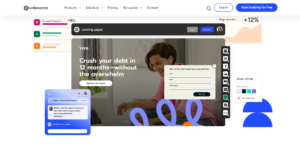
Unbounce is one of the most established landing page platforms in the market.
It has a strong association with PPC, conversion rate optimization, and performance marketing.
For agencies managing paid advertising, that focus can be valuable.
A landing page isn’t useful simply because it looks good. It needs to support the campaign that brought visitors to it.
Unbounce provides a visual page builder alongside experimentation, optimization, AI-powered capabilities, and integrations.
Its reputation also means many marketers are already familiar with the platform.
Why agencies may choose Unbounce
Unbounce is particularly useful for agencies where paid traffic and conversion optimization are central to their work.
Its platform is built around creating campaign-specific experiences rather than treating every page like a traditional website page.
Who is Unbounce best for?
- PPC agencies
- Performance marketing agencies
- CRO teams
- Paid acquisition teams
- Agencies managing conversion-focused campaigns
If you’re considering alternatives, see Best Unbounce Alternatives for High-Converting Pages.
Best for: PPC and conversion-focused agencies.
4. Instapage
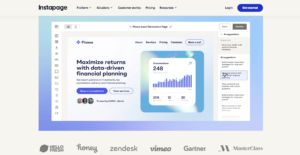
Instapage is aimed at teams running more sophisticated advertising campaigns.
Its platform combines landing page creation with experimentation, personalization, analytics, and advertising-focused workflows.
One of its strongest use cases is connecting advertising campaigns with relevant landing experiences.
That’s useful when an agency manages multiple audiences, campaigns, and offers and needs more than a generic landing page.
Why agencies may choose Instapage
The platform is particularly suited to larger advertising programs where personalization and experimentation play an important role.
It also provides tools for understanding campaign performance and improving landing experiences.
Who is Instapage best for?
- Enterprise advertising teams
- Larger performance agencies
- Agencies managing complex paid campaigns
- Teams focused heavily on personalization and experimentation
For a small agency creating a few pages each month, Instapage may offer more capability than necessary.
Best for: Enterprise advertising teams.
5. Leadpages
Leadpages takes a simpler approach.
It’s designed to help marketers create landing pages without needing extensive technical knowledge.
Its visual editor, templates, AI-assisted creation, analytics, and testing capabilities make it a practical option for agencies that don’t need an extremely complex marketing platform.
For a small agency, simplicity can actually be a competitive advantage.
Your team may not need dozens of advanced tools.
It may simply need to create a good campaign page, publish it, collect leads, and measure results.
Why agencies may choose Leadpages
- Straightforward page creation
- Visual editing
- AI-assisted creation
- Templates
- A/B testing
- Analytics
- Lead generation tools
As an agency grows, however, it should evaluate whether the platform continues to support its client and campaign workflow.
Best for: Small and mid-sized agencies.
6. HubSpot
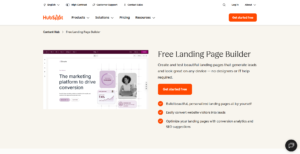
HubSpot is different from the other platforms on this list because landing pages are part of a much larger ecosystem.
The platform combines marketing, CRM, sales, automation, analytics, and customer management.
That makes HubSpot particularly attractive for agencies whose clients already use HubSpot.
Instead of adding another landing page platform, an agency can keep the landing page connected to the client’s existing CRM and marketing infrastructure.
This can simplify the overall stack.
Why agencies may choose HubSpot
- Landing pages
- CRM
- Marketing automation
- Forms
- Analytics
- Personalization
- Customer data
- Broader marketing tools
The trade-off is that HubSpot can be more than an agency needs if landing pages are the only requirement.
Best for: Agencies already working within the HubSpot ecosystem.
7. GoHighLevel
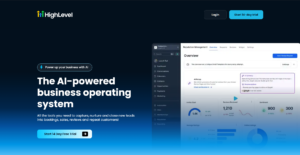
GoHighLevel was built with agencies in mind and takes an all-in-one approach.
Alongside landing pages and funnels, it provides CRM, pipelines, automation, reporting, communication tools, and client management.
For full-service agencies, this can be attractive because landing pages are only one part of their client acquisition workflow.
Instead of combining several different tools, the agency can manage more of the process within one platform.
Why agencies may choose GoHighLevel
- Landing pages
- Funnels
- CRM
- Marketing automation
- Lead management
- Reporting
- Client accounts
- Communication tools
The downside is that the platform is broader and can require more time to learn.
If you’re only looking for a landing page builder, a focused platform may be easier.
Best for: Full-service marketing agencies.
Landing Page Builder Comparison
Here’s the quick comparison if you want to see the main options side by side:
| Platform | Pricing model | Starting price | Best for |
| Vounce | Free / Paid | — | Performance & growth campaigns |
| Landingi | Free Trial / Paid | $29/mo | Agencies managing pages at scale |
| Unbounce | Free Trial / Paid | $99/mo | PPC & conversion-focused agencies |
| Instapage | Free Trial / Paid | $99/mo | Enterprise advertising teams |
| Leadpages | Free Trial / Paid | $49/mo | Small & mid-sized agencies |
| HubSpot | Freemium / Paid | $0 | Agencies using HubSpot |
| GoHighLevel | Free Trial / Paid | $97/mo | Full-service marketing agencies |
Starting prices can vary by billing period and plan. Check the provider’s current pricing before making a purchasing decision.
Which Landing Page Builder Is Best for Your Agency?
Instead of asking which platform is universally the best, start with the type of work your agency does.
Choose Vounce if campaign speed is your priority
If your agency regularly launches performance campaigns and needs marketers to create, publish, test, and optimize pages quickly, Vounce is worth considering.
It is particularly relevant if developer dependency is slowing down campaign execution.
Choose Landingi if you’re managing pages at scale
If your agency’s biggest challenge is the number of landing pages you’re managing, Landingi is a strong option to investigate.
Its focus on landing page production makes it particularly relevant for high-volume workflows.
Choose Unbounce if PPC is central to your work
For agencies heavily focused on paid acquisition and conversion optimization, Unbounce remains a strong platform to evaluate.
It’s particularly relevant when landing page performance is closely tied to advertising performance.
Choose Instapage for sophisticated advertising programs
If you’re managing larger advertising programs with multiple audiences and need advanced experimentation and personalization, Instapage is worth considering.
Choose Leadpages for a simpler workflow
If your agency is smaller and mainly needs to create lead-generation and campaign pages without unnecessary complexity, Leadpages may be enough.
Choose HubSpot when the client already uses HubSpot
If a client’s CRM and marketing operations already live inside HubSpot, adding another platform may create more work than it saves.
Choose GoHighLevel for an all-in-one agency stack
If landing pages are only one component of your service and you also manage CRM, funnels, automation, and lead management, GoHighLevel may be the better fit.
How Much Should an Agency Spend on Landing Page Software?
There’s no fixed answer.
The right budget depends on the amount of work the platform helps your agency handle.
For example, an agency creating three pages per month for two clients has very different needs from an agency managing 100 campaign pages across 20 clients.
Before comparing plans, estimate your actual usage.
Consider your monthly page volume
How many pages do you expect to create?
Consider your number of clients
Will each client need separate campaigns, domains, or workflows?
Consider your traffic
Some platforms structure pricing around traffic or usage.
Consider your team
How many marketers, designers, and other team members need access?
Consider your optimization needs
Do you need A/B testing, personalization, analytics, or automated optimization?
Consider the cost of your current workflow
This one is often overlooked.
If your current process requires a designer and developer for every landing page, the cost of the software isn’t the only expense.
There is also the cost of time and delayed campaigns.
Why Speed Matters for Agency Landing Pages
For an agency, speed isn’t simply about being able to design a page quickly.
It’s about how quickly the entire campaign can move.
Imagine a client approves a paid campaign on Monday.
The ads are ready.
The creative is ready.
The budget is approved.
But the landing page still needs development.
The campaign waits.
By the time the page goes live, the team may have lost several days of potential traffic and learning.
The same problem appears after launch.
If the team notices that a CTA isn’t performing well but needs developer support to change it, optimization gets pushed down the priority list.
This creates a cycle:
Campaign approved → Page request → Design → Development → Review → Fixes → Publishing
The more handoffs involved, the slower the process becomes.
A modern landing page workflow should make that cycle shorter.
This is one of the reasons we previously looked at why landing pages shouldn’t take weeks.
What Happens After a Landing Page Goes Live?
A common mistake is treating launch as the end of the landing page process.
It’s actually the beginning.
Once the page starts receiving traffic, you can start learning from real visitors.
Maybe the headline is attracting attention but the form completion rate is low.
Maybe one CTA is outperforming another.
Maybe visitors from one advertising campaign convert much better than visitors from another.
Maybe the page needs different messaging for different audiences.
This is where optimization becomes important.
A strong agency workflow should allow your team to:
Launch → Measure → Learn → Test → Improve
Instead of:
Launch → Forget
A/B testing is particularly useful here because it replaces assumptions with actual performance data.
And personalization can help when different audiences respond to different messages.
For more on what influences visitor decisions, see What Makes Visitors Convert? The Psychology Behind High-Converting Landing Pages.
Don’t Let Your Marketing Stack Become Another Bottleneck
Agencies often accumulate tools over time.
One tool for landing pages.
One for forms.
One for analytics.
One for CRM.
One for automation.
Another for testing.
Another for reporting.
Each tool might be useful on its own.
The problem comes when the team has to constantly move information between them.
This is especially frustrating when you’re trying to scale.
More clients mean more campaigns, which means more pages and more data moving between systems.
That’s why agencies should consider how a landing page platform fits into the existing stack before adding it.
The goal isn’t necessarily to use fewer tools at all costs.
It’s to avoid creating unnecessary handoffs.
We explore this broader problem in Marketing Tool Sprawl: Why Teams Are Moving to Unified Platforms.
Landing Page Builders Are Only Part of the Equation
A great landing page builder won’t automatically produce a great campaign.
The offer still matters.
The messaging still matters.
The audience still matters.
The traffic source still matters.
And the page still needs to give visitors a clear reason to act.
That’s why the best agencies don’t treat the landing page as an isolated asset.
They look at the relationship between:
Ad → Message → Landing Page → Offer → CTA → Conversion
If the ad promises one thing and the landing page talks about something completely different, even a beautifully designed page can struggle.
Likewise, if the page gets visitors but the offer isn’t compelling, changing the button color isn’t going to solve the real problem.
The software makes testing and iteration easier.
The strategy still comes from the marketing team.
Final Thoughts
The best landing page builder for agencies isn’t necessarily the platform with the most features.
It’s the platform that fits your agency’s workflow.
For performance and growth campaigns, Vounce is a strong option for teams that want to create, launch, test, and optimize landing experiences quickly.
Landingi is worth considering for agencies managing landing pages at scale.
Unbounce remains a strong choice for PPC and conversion-focused teams, while Instapage is better suited to larger advertising programs.
Leadpages can work well for smaller agencies looking for a simpler workflow.
HubSpot makes sense when landing pages need to live inside an existing CRM and marketing ecosystem.
And GoHighLevel is a broader option for full-service agencies that want landing pages, CRM, automation, and funnels in one platform.
Before choosing, look beyond the template library and starting price.
Ask how the platform will fit into your agency’s actual workflow.
How quickly can your team launch?
How easily can marketers make changes?
How many clients and campaigns can you comfortably manage?
How quickly can you test a new idea?
And how much developer dependency can you remove?
Those answers will tell you much more about the right landing page builder than a feature checklist ever will.
// FAQs
Frequently Asked Questions
There isn’t one best option for every agency. Vounce is well suited to performance and growth campaigns, Landingi to agencies managing landing pages at scale, Unbounce to PPC-focused teams, and GoHighLevel to agencies wanting a broader CRM and automation platform.
Agencies should look at page creation speed, multi-client workflows, integrations, A/B testing, personalization, analytics, collaboration, publishing options, and pricing at scale.
Yes, especially when an agency creates landing pages regularly. A dedicated builder can reduce design and development bottlenecks and make it easier to launch, test, and update campaign pages.
Ease depends on the agency’s workflow. Visual builders such as Vounce, Landingi, Leadpages, and Unbounce reduce the need for coding, while platforms such as HubSpot and GoHighLevel may make more sense when the agency already uses their broader marketing ecosystems.
Pricing varies considerably. Some platforms offer free tiers or trials, while paid plans can start around $24–$99 per month and increase based on traffic, features, users, domains, or client accounts. Enterprise platforms may use custom pricing.